Key takeaways
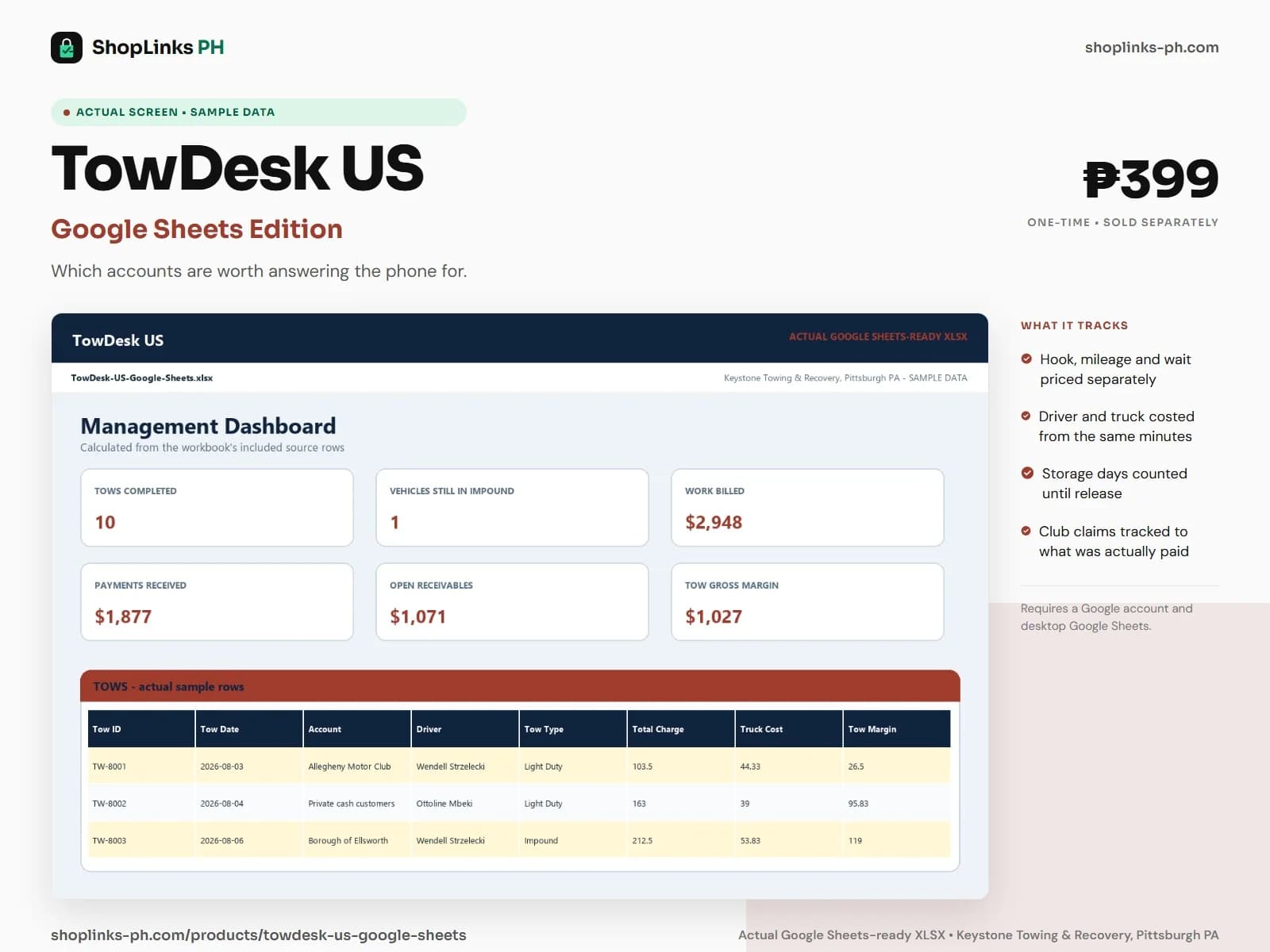
- Hook, mileage and wait are priced separately.
- Driver and truck cost come from job minutes.
- Storage accrues until release is recorded.
- Club claims are tracked to what was remitted.
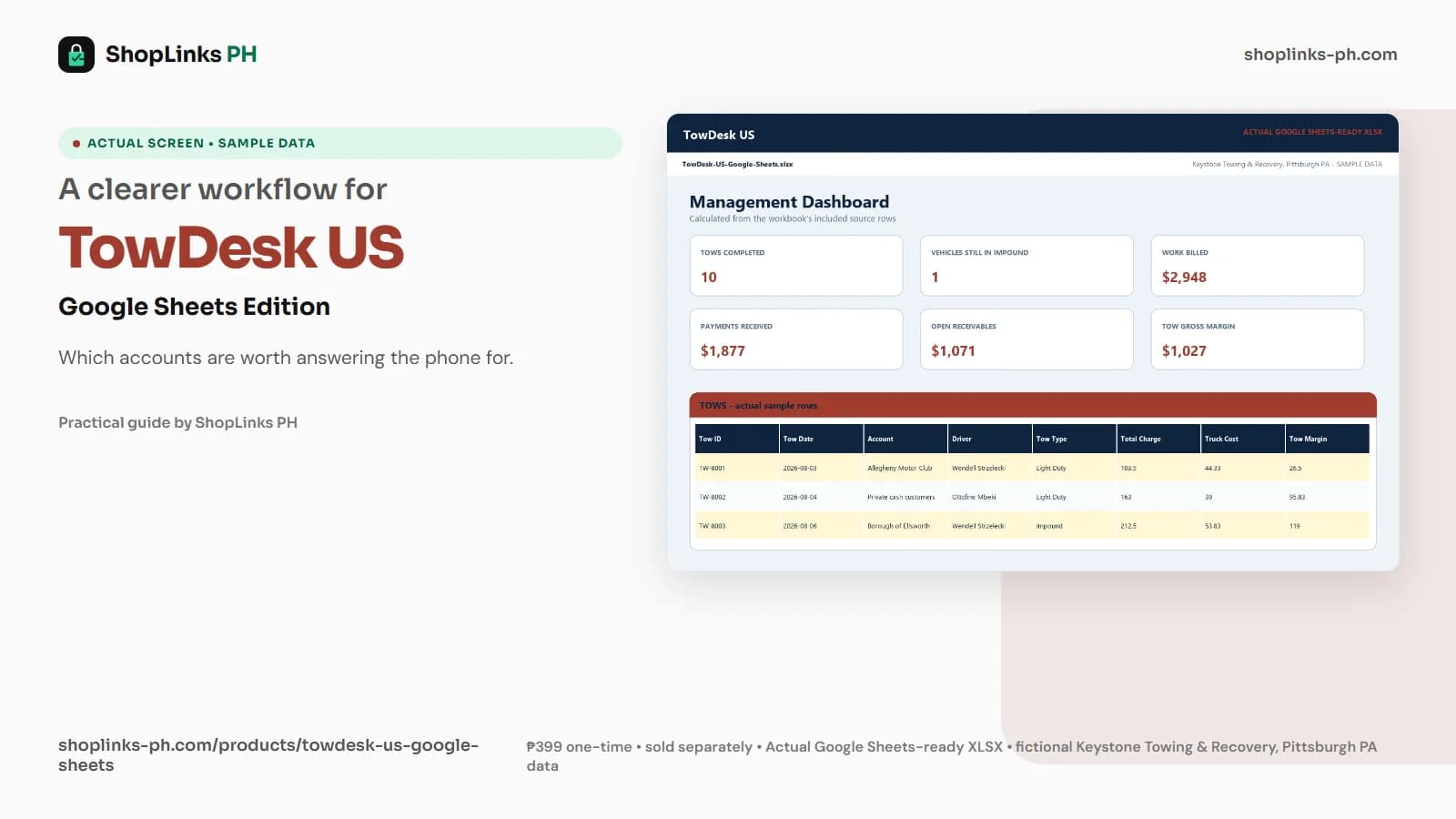
A tow operator runs several businesses from the same trucks. A private roadside call at full rate, a motor club call at a rate the club set, a police impound where the owner pays at release, and a dealer transport priced by the mile. They share drivers and equipment, and they earn nothing like each other. Without a per-call cost, the busy nights and the profitable nights look identical. TowDesk US separates them.
The charge has three parts
Hook fee, loaded miles at the account's own per-mile rate, and wait time at an hourly rate are recorded separately and totalled.
Keeping wait separate matters because it is the part motor clubs most often dispute, and an operator needs to know what was billed before arguing about what was paid.
Two costs from the job minutes
Driver cost and truck cost both derive from the minutes the call actually took, using that driver's wage and that truck's hourly cost.
A wrecker recovery and a flatbed transfer are not the same cost per hour, and treating them as one is how heavy work ends up subsidising light work or the reverse.
Storage that counts itself
A storage record counts days from the stored date, keeps counting while the vehicle sits, and stops at release.
Past thirty days it reads Lien eligible, which is a prompt rather than a legal step, and it is the point at which an unclaimed vehicle stops being revenue and starts being a yard problem.
Claims against what was paid
Every motor club claim records what was submitted and what the club actually remitted.
The gap between those two, read across a month, is the real club rate, and it is usually lower than the published one.
Review exceptions every week
Resolve duplicate IDs, missing links, overdue balances, negative amounts, and open operational items in CHECKS before using the dashboard for decisions.
TowDesk US Google Sheets Edition is designed for use with a Google account and current desktop Google Sheets.
No police or state impound reporting, no lien processing or title transfer filing, no motor club dispatch integration, no GPS or fleet telematics, and no driver payroll or hours of service logging.